












Although it has been a year, I have had several readers ask me about my final week as well as my final results after following the SIBO Elemental Diet to help with my gastrointestinal issues. Since the final post was never written, I thought it was high time to let my readers find out the final chapter of my trial with the SIBO Elemental Diet.
It has almost been an entire year since I began writing about my belly woes.
And although I am thrilled with how much people have been reaching out to me with regards to my 4 weeks on the Elemental Diet, it also brings me such sadness to know how many people are in my same situation.
And that situation sucks!
For those of you who have not had a chance to read any of my blog posts regarding the Elemental Diet, here are the links if you want more information and a deeper look into each phase:
- The Elemental Diet and Why am I doing it
- My First Week on the Elemental Diet
- My Second Week on the Elemental Diet
- My Failed Week on the Elemental Diet
- My Third Week on the Elemental Diet
What is the SIBO Elemental Diet?
- a liquid diet used predominantly to help people to recover from certain health problems.
- its name from the fact that nutrients are introduced into the body in as close to their elemental form as possible.
- it can be made at home or be bought in a prepackaged form
- no solid food is ingested for the course of the diet
- the diet typically lasts anywhere from 10 days to 4 weeks
- it is typically used to treat gastrointestinal issues such as Crohn's or Small Intestinal Bacterial Overgrowth (S.I.B.O)

What is SIBO?
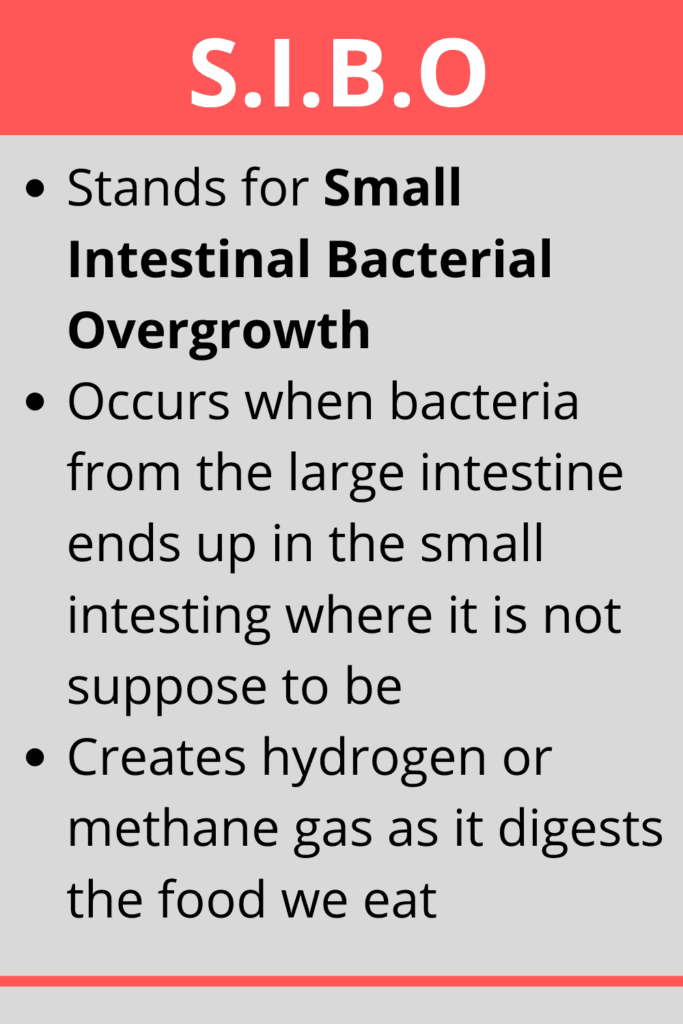
- SIBO stands for Small Intestinal Bacterial Overgrowth
- It is a condition whereby the bacterial that are normally found in the large intestines (where they belong!) has somehow managed to make its way up to the small intestines (where they do NOT belong)
- If this bacteria gets into the small intestines where our food has not been fully digested, the bacteria consume the food and produce a byproduct of either hydrogen or methane gas.
What causes SIBO?
It is thought that almost all of SIBO cases are the result of issues surrounding the Migrating Motor Complex (MMC).
The MMC is a wave of electromechanical activity that sweeps through the small intestine every few hours to push any undigested food or bacteria down into the large intestine.
If it gets damaged (which commonly happens with food poisoning), bacteria can stick around in the small intestine, leading to SIBO.
How can the MMC get damaged?
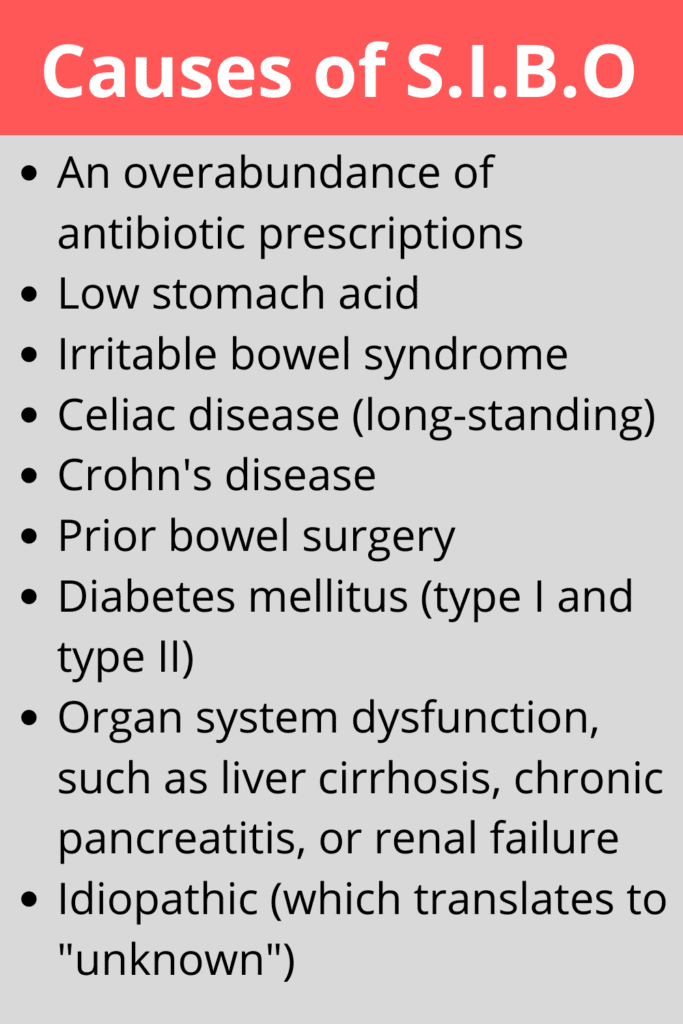
Although there are many theories, the most common are the following:
- An overabundance of antibiotic prescriptions
- Low stomach acid.
- Irritable bowel syndrome.
- Celiac disease (long-standing)
- Crohn's disease.
- Prior bowel surgery.
- Diabetes mellitus (type I and type II)
- Organ system dysfunction, such as liver cirrhosis, chronic pancreatitis, or renal failure.
- Idiopathic (which translates to "unknown")
How is SIBO diagnosed?
- To diagnose SIBO, a lactulose based liquid is consumed on an empty stomach
- At 30 minute intervals, the patient blows into a tube which collects a sample of the breath
- Once all timed breath samples are collected, the tubes are sent to a lab.
- The lab analyzes the breath for Hydrogen or Methane
How does the test for SIBO work?
- The bacteria that is NOT supposed to be in your small intestines react severely with the lactulose solution
- Therefore, if NO bacteria are found in the small intestines, the lactulose solution passes seamlessly through the small intestines without any formation of either Hydrogen or Methane byproduct
- If bacteria are in the small intestine, once the lactulose hits the small intestine, the SIBO bacteria react to the lactulose which releases a gas that you breathe out, into the tube.
- So, if there are bacteria in your small intestine, it will breakdown the lactulose solution and you will breathe out either Hydrogen or Methane which the lab will be able to detect.
What are the types of SIBO?
Hydrogen Dominant:
- Most common type
- Most likely type if you suffer from diarrhea symptoms
- Bacteria produce hydrogen gas as a byproduct of carbohydrate fermentation in the digestive system.
- This is a normal process which should ONLY occur in our large intestines
- If bacteria are in our small intestines then large amounts of hydrogen gas are produced in the small intestine resulting in excess hydrogen which can increase the transit time which in turn, can result in diarrhea
Methane Dominant:
- This type is actually the result of archaea which are actually NOT bacteria (although we still refer to it as SIBO, it should actually be SIAO)
- Archaea can not survive without the release of the hydrogen from bacteria. They literally absorb the hydrogen gas that the bacteria produces as a byproduct of carbohydrate (especially fibre) fermentation
- Methane gas actually causes more bloating as well as slows the transit time of food which in the end results in more constipation type symptoms
- This is much less common and the people that tend towards methane dominant also typically have the Hydrogen dominant form as well which makes it trickier to treat

What are the most common symptoms of SIBO?
- constipation or diarrhea
- abdominal pain or discomfort
- bloating and abdominal distention
- nutritional deficiencies
- muscle aches and pains
- skin rashes

Why is it so important to eradicate SIBO?
- chronic SIBO destroys the bonds that hold the cells together in our guts
- if the bonds break, food additives, chemicals and particles can enter directly into our bloodstream
- when this occurs, an inflammatory response ensues which results in inflammation
- studies have shown that chronic gut inflammation can lead to autoimmune disorders, an increase occurrence of Parkinson's as well as an increase in dementia and Alzheimers
What are the most common ways to treat SIBO
- ANTIBIOTICS - such as Neomycin (better for Methane dominant), Metronidazole, and Rifaximin.
- NATURAL PRODUCTS - Neem Oil, Oregano Oil, Berberine, Allicin
- DIETARY - Low FODMAP, SCD diet
- LIFESTYLE - Fasting, meditation and exercise

Why has it taken me so long to post the final week of my SIBO Elemental Diet?
It has taken me over a year before posting the final results from my Elemental Diet Experiment.
Truth be told, I never did take a second SIBO test so I can not tell you whether I have rid myself of my SIBO or not.
Personally, I do not believe I have. I feel like I may have decreases the amount of bacteria/archaea but have not irradicated them fully.
However, I do feel like I have made great strides when it comes to alleviating my symptoms. And for those of you like myself who had such abdominal pain that you just wanted to curl up in a ball every day, you can understand how even this baby step is a huge leap, in and of itself.
So, what happened during my Final Week on the SIBO Elemental Diet
After following the Elemental Diet using Physician's Formula Dextrose-Free Elemental Powder for 3 weeks, I ended up with a terrible rash all over my chest area.
After calling the company and inquiring about this being a possible side effect, they told me that it was probably a result of the "detoxification" process.
Being a chiropractor and having some medical knowledge, this answer did not seem like a realistic response.
For most nutritionally healthy individuals, any type of detoxification symptom typically occurs in the first week. By week 3, I should not have been experiencing "detox" skin symptoms.
I am sure most of you will agree that when we end up with a rash, it is an inflammatory response to an irritant. Therefore, to me, my skin rash was the result of something I was consuming. Since I was only consuming the Elemental Liquid diet, I decided to stop drinking the formula and see if the rash went away.
And it did!
Within 3 days, my skin had completely returned to its normal complexion and the rash had disappeared.
Now although my bloating had diminished by only consuming liquids (looking back I now realize that this would be the case for any liquid diet) my pain was still present, I decided to investigate further into the ingredients that I had been consuming.
The first ingredient that is listed on the Physician's Elemental Diet label is Maltodextrin!
That was the first clue that helped to lead me down the bunny hole for my health!
The second clue came after blood results confirmed that I have an IgA deficiency.
And the final clue was that I have a condition called gastroparesis.
What is Maltodextrin?
This is from Medical News Today:
- It is a white powder that is relatively tasteless and dissolves in water.
- It is an additive in a wide range of foods, as it can improve their texture, flavour, and shelf life.
- It is possible to make maltodextrin from any starchy food, including corn, potato, wheat, tapioca, or rice.
- Although the powder comes from these natural products, it then undergoes processing.
- To make maltodextrin, manufacturers put starch through a process called hydrolysis.
- Hydrolysis uses water, enzymes, and acids to break the starch into smaller pieces, resulting in a white powder consisting of sugar molecules.
What foods contain maltodextrin?
- most salad dressing
- nut butters (including my favourite Kraft Peanut Butter!)
- most seasoning packets including organic brands such as Simple Truth Organic
- most packaged foods such as chips, pretzels, cereals
- most sauces
- many vitamins and supplements (I was shocked about this and found it listed in my Garden Of Life supplements)
- sweeteners (such as Stevia in the Raw)
- prepared meats that have already had spices or sauces added
- soups
- meat substitutes
- protein bars and shakes
- sweets and treats - such as ice cream and most sugar-free treats like Wether's and Russel Stover
- nuts such as Planter's Peanuts
- shredded cheese - this was an absolute shocker but I noticed the ingredient on a package of shredded taco cheese from my local Amish grocery store!
Why is Maltodextrin bad for you?
- although it has a zero-calorie and carbohydrate count, it actually has a glycemic index higher than sugar
- it causes severe blood sugar spikes (even though it is found in almost ALL sugar-free and diabetic foods)
- it can reduce the number of good bacteria and an increased quantity of harmful bacteria.
- this could potentially lead to intestine damage and a higher risk of inflammatory bowel diseases.
- it can increase the activity of E. Coli which they are currently linking to an increase in Crohn's disease
- it may help Salmonella survive in our guts which can result in gastroenteritis
- can cause allergic reactions such as swelling and skin rashes
- it is a gut irritant
- can disrupt hormonal regulation

What happened when I stopped consuming ANY product containing maltodextrin?
- my skin rash went away
- my "rosacea" that I had been having on my face for over a year went away
- my period (which had been sporadic my entire life) became regular for the first time ever!
- my bloating decreased by 75%
- my pain decreased by 80%
- my constipation COMPLETELY went away
What is an IgA deficiency, how is it tested for and what are the symptoms?
Immunoglobulins, also known as antibodies, are glycoprotein molecules produced by plasma cells (white blood cells). They act as a critical part of the immune response by specifically recognizing and binding to particular antigens, such as bacteria or viruses, and aiding in their destruction.
Immunoglobulin A (IgA) is an antibody blood protein that’s part of your immune system. Your body makes IgA and other types of antibodies to help fight off sickness. Having an IgA deficiency means that you have low levels of or no IgA in your blood.
IgA is found in mucous membranes, mainly in the respiratory and digestive tracts. It is also found saliva, tears, and breastmilk. A deficiency seems to play a part in asthma and allergies. Researchers have also linked IgA deficiency to autoimmune health problems. These are health problems that cause your body’s immune system to attack your body by mistake.
My personal take on this is my genetic IgA deficiency means that I am more sensitive to a variety of foods. Eating these foods causes a mild allergic reaction (since it is mild, a standard skin prick allergy test will come out negative) and hence leads to inflammation and irritation of my gut.
Chronic gut irritation is what I believe to have caused my gastroparesis.
What is gastroparesis and how is it diagnosed?
Gastroparesis is a condition that affects the normal spontaneous movement of the muscles (motility) in your stomach. Ordinarily, strong muscular contractions propel food through your digestive tract. But if you have gastroparesis, your stomach's motility is slowed down or doesn't work at all, preventing your stomach from emptying properly.
To test for gastroparesis, you typically eat a meal at the hospital that contains radioactive eggs. Every 30 minutes for 4 hours total, that use imaging to see how fast the radioactive eggs are moving through your digestive tract.
In healthy individuals, after 4 hours of time, 90% of the food one has ingested has been moved through the first section of the digestive tract.
My test...after 4 hours, only 18% of my food had actually moved!
Like I stated earlier, S.I.B.O is almost always caused by an ill-functioning Migrating Motor Complex which was officially confirmed with my gastric-emptying test.
In Conclusion
You have to find out what caused the SIBO.
SIBO is almost always the result of some underlying condition allowing the bacteria to move into the small intestine. If you don't get to the root of the cause, you will never be able to eliminate SIBO or even be able to alleviate some of your symptoms
- is there a food or additive that you are eating that you may actually be allergic to resulting in your gut being disrupted?
- are you severely stressed?
- are you low in magnesium which helps with muscle relaxation and hence GI motility?
- do you have gastroparesis?
- do you have any immunoglobulin deficiencies?
You have to stop feeding the SIBO
SIBO loves certain food groups and food types. Try to follow a low FODMAP as well as an SCD. If you need help with what to eat, check out this SIBO diet
You have to be good to your gut
Here is a list of things that help to maintain a healthy gut:
- eat fermented foods such as raw sauerkraut or other natural prebiotic and probiotic foods
- certain movements that are not too stressful for your gut such as walking
- decrease stress
- do yoga
- meditate
- get enough rest
- decrease your sugar intake (but be careful using sugar substitutes as many contain maltodextrin or other fake sugars that can irritate your gut)
You need to space your meals further apart
If you eat small meals frequently, you will constantly have food in your digestive system. This means that the bacteria causing SIBO is constantly being fed.
Also, our MMC starts working when we DON'T have any food in our system. You need the MMC to be working REALLY well in order to push the bacteria back to where it belongs as well as to keep it there.
What were the top things that I did to alleviate my SIBO symptoms?
I eliminated any and all foods containing maltodextrin, sugar and gluten
- I checked all the food I was eating for maltodextrin. I found it in Stevia in the Raw, Simple Truth Organic Seasoning Mixes, peanuts and other nuts and seeds(I was shocked!) and many other foods that I had been consuming
I started intermittent as well as prolonged fasting
- I currently only eat at the most 2 times per day. I often have breakfast and dinner and completely skip lunch and any other snacks. I use to be a BIG snacker which may have stress my MMC and caused it to come to a screeching halt
- I practice daily as well as multiple day fasts to give my system a much-needed break
I began addressing and dealing with my stress
- I got rid of all stressful relationships in my life
- I learned to say "So What" when things started to get me worked up or stressed
- I realized that if I do my best every day, it is all I can ask of myself
I started making sure that I get at least 6 hours of sleep
- I would love to get 8 hours an am working on it. However, I am not beating myself up if I only get 6 hours
I stopped running and exercising as much
- I know this sounds crazy, but I was actually getting stressed out when it came to exercising
- I would not be able to sleep, scared that I would not get up in time to get my run and workout done before the day began
- I currently am still VERY active. However, I chose more walking over running and Mr. Grumbles and I only work out for about 30 minutes in the morning at home
I stopped eating so many raw vegetables and high fibre foods
- Vegetables and fibre are good for your gut, right? Not if you have SIBO! Hard to digest foods give me heartburn and stay in my system WAY TOO LONG which is not good as it gives the bacteria a plethora of time to eat and produce gas byproducts

So, to wrap it all up...
- try to find out why you got SIBO in the first place...was it from food poisoning, from a misfunctioning MMC, from a food allergy, from stress, etc...
- start a food diary to see if any of your everyday foods may have chemicals or additives that you may be sensitive to
- start intermittent fasting or daily fasting
- stop snacking and make sure you really chew your food between meals (you should aim to chew 15-20 times before swallowing)
- stop eating too many raw vegetables or other high fibre foods (like chicory root, psyllium and flax)
- decrease stress by eliminating things, hobbies, friends and commitments that you are not fully benefiting from
- BE PATIENT!!! It has taken me over a year to begin to feel better and to this day, I still can have some pretty bad days but overall, each month seems to be a little easier than the last.

If you have any questions or would like for me to dive further into any additional topic with regards to S.I.B.O or the Elemental Diet, please don't hesitate to write in the comment section below. I will try to post or answer any questions within 1-2 weeks of receiving your inquiry.
Once again, here is a list of the other posts regarding the Elemental Diet and SIBO:
- The Elemental Diet - Part 1 of 5
- Elemental Diet Experiment - Week #1 Completed!
- Week 2 on the Elemental Diet
- Week #3 On The Elemental Diet


Julie Ann says
Ug! I am just starting the ED (like today!). My functional med doctor suggested a two week stint to help with my leaky gut issues that manifests as eczema. I have been dealing with an eczema flare since November 2019, with no relief except for the 4.5 day fast I did last spring. I have been using a number of supplements and dietary changes under her guidance (although I have already done a number of dietary adjustments). Anyway, I am reading this and really hoping this is not a mistake or sends me down a worse path.
Cat says
First and foremost, I can honestly tell you that I feel your pain! I too have suffered from EVERYTHING you have listed and felt like I had nobody to turn to so PLEASE feel free to email me any additional questions. Also, although I am a chiropractor, I am not a naturopath...this is my personal advice from all that I have found in my journey with SIBO and gastroparesis. First, I am disappointed that so many practitioners don't recognize how bad maltodextrin is for your gut. The whole point of combating SIBO is to get a healthy gut so that your good gut bacteria can fight off SIBO. Maltodextrin was my NUMBER 1 enemy. I soon as I cut it out of my life (and since it comes from corn most of the time, I also eliminated corn which I had been eating since I am gluten-free) my periods have become regular (yes...at the age of 43 I am finally a "normal" female), I stopped getting ovarian cysts and my bloating went down SIGNIFICANTLY. A low FODMAP diet helps but it is definitely not easy to follow...I mean, seriously, you can have like 2 Brussel sprouts but not 3?!!! If you can commit to it, kudos to you but I never was able to stick with it as there were too many "gray" areas.
The big question you have to ask yourself is did the SIBO cause gastroparesis or did the gastroparesis cause SIBO? I feel like I developed gastroparesis first (probably due to all the Stevia in the Raw I ate growing up and not realizing that it is over 70% maltodextrin and NOT stevia) and my gastroparesis caused me to develop SIBO.
Because of that conclusion, for me to get rid of my SIBO, I first have to improve my gastroparesis which I have been doing.
I am not sure if my "rant" answered even one of your questions but PLEASE don't hesitate to email me at mycrashtestlife@gmail.com if you have any other questions. IF all gastroparesis people got together, I am sure we could find the cause by which the medical community seems mystified!
Arden Carlton says
I just came across your website because in a few days I am going to start the Elemental diet along with a collection of herbs my natural practitioner gave me. (anti-parasite, gallbladder/liver support and others). About 7 years agoI also was told I have gastroparesis from a test with radioactive oatmeal! I have been dealing with constant bloating, irregular periods, constipation, nutritional deficiencies etc for more than 10 years. I'm 25 now and I finally found out I might have SIBO, candida and also parasites. Is it your advice that I don't do the Elemental diet since it contains malodextrin? I know I need to do something to starve off all the bad bacteria and reset my system to start some kinda of low-fodmap/clean diet but now I am worried about those additives in the Elemental Diet. Advice?
Cat says
Maltodextrin is not a good food additive. It is a cheap additive that adds an extra level of sweetness to a product. It should be labelled on your nuts but can also be included under the general term "natural flavouring". If you decide to do the Elemental Diet, the "Dextrose-Free" formula's main ingredient is Maltodextrin so just be aware of that. As for your symptoms, write down EVERYTHING that you consume daily or almost daily (ie. coffee, nuts, almond milk in your coffee, certain sugar you use in your coffee, snacks that you may eat daily etc...) and send me the list if you want and I can try and guide you in terms of what to eliminate next. 2 brains are better than 1!
Stephanie says
In regards to malodextrin- is this a good additive or it is found naturally occurring in nuts?? I am doing the low FODMAP and SCD now and am worried my snacking nuts might be keeping my symptoms here.. The elemental diet is our next idea..
Thanks!
Steph