




Have you ever wondered about all the types of keto and low carb sweeteners that are on today's market? This guide to keto sweeteners will explain some of the most common low carb and keto sweeteners on the market, where they come from and how they compare to regular sugar.
Listed below are the most common keto, sugar-free and low carb sweeteners that you can find on the market today. Use this guide to Keto Sweeteners to convert any of your favourite recipes into keto and low carb versions.
Highly Recommend
Allulose
- A relatively new sweetener which is naturally found in wheat, figs, and raisins.
- Created by converting fructose from corn.
- About 70% as sweet as table sugar.
- Has similar taste and texture as sugar, but without the calories and carbs.
- Unlike other sweeteners, allulose resists fermentation by your gut bacteria which decreases the chances of experiencing digestive issues such as bloating and gas.
- For people with diabetes or blood sugar issues, allulose does not raise blood sugar or insulin levels.
- Some research shows a link between regulating blood sugar and insulin levels, preventing obesity, decreased risk of chronic disease, and some anti-inflammatory properties.
- 0.2-0.4 calories per gram
- Cost: $0.69 per ounce
- Best for all types of baking including puddings and custards as it does not crystallize when cooled.
- Check out my easy Marshmallow Recipe for an Allulose-based recipe
Bocha Sweet
- A new sweetener to the market made from an extract of a squash in Japan known as kabocha.
- Kobocha has been a superfood in the Japanese diet for centuries.
- It has the same taste as table sugar
- There is no aftertaste unlike other sweeteners
- No digestive issues linked to this sweetener.
- The companies claim that their competitors like erythritol, allulose, and stevia are derived from cheaper sources like waste corn material, which therefore explains the higher cost for Bocha Sweet.
- Some research shows a link between regulating blood sugar and insulin levels, preventing obesity, decreased risk of chronic disease, and some anti-inflammatory properties.
- 0 calories per gram
- Cost: $1.00 per ounce (if you buy it in bulk)
- Best for all types of baking including puddings and custards as it does not crystallize when cooled.
Erythritol
- Created when yeast ferments glucose from corn or wheat starch
- 70% of the sweetness as table sugar
- Your body can't digest erythritol so when it passes through the digestive system unchanged, it is fermented by bacteria in the colon and can cause GI symptoms like gas and bloating.
- Different than other sugar alcohols, because about 90% gets absorbed in bloodstream before reaching the colon and causing issues.
- Some research shows a link between regulating blood sugar and insulin levels, preventing obesity, decreased risk of chronic disease, and some anti-inflammatory properties.
- 0.24 calories per gram
- Cost: $0.30 per ounce
- Best for cookies and cakes but not good for puddings and custards as it crystallizes as it cools and therefore will create a "gritty" texture
- Check out my Keto Copycat Coconut Clusters recipe to see the magic erythritol has in creating a nice crunch
Stevia
- Stevia is a sweet tasting plant that has been used as a sweetener for centuries. It's grown in Brazil, Paraguay, Japan, and China
- It is a bushy shrub and part of the sunflower family.
- 200-300 sweeter than table sugar
- In its purest form, it is the most expensive sweetener on the market. However, you can use much less to get the same sweetness so a little goes a long way.
- It contains 8 glycosides, the sweet components isolated and purified in the stevia leaves. The most common are Stevioside and Reb A.
- Some common names include- Enliten, PureVia, Rebiana, Stevia, Steviacane, Stevia in the Raw, and Sweetleaf
- Most stevia products contain sugar alcohol, which can cause GI upset
- Most stevia products are not pure and are mixed with either erythritol or maltodextrin
- Some research shows a link between regulating blood sugar and insulin levels, preventing obesity, decreased risk of chronic disease, and some anti-inflammatory properties.
- 0 calories per gram
- Cost: $3.12 per ounce
- Best for all types of baking but be careful when using as it can have a bitter aftertaste (especially with chocolate)
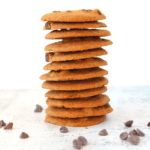
- Check out my Chocolate Chip Cookie Recipe for a Stevia-based recipe
Monk Fruit
- It's extracted from monk fruit, which are small roiund fruit grown in Southeast Asia.
- Also called Lo Han Guo
- One of the most expensive sweeteners on the market
- Used in traditional Chinese medicine
- 100-250 times sweeter than table sugar.
- It's so sweet manufacturers mix it with other natural products like inulin or erythritol to reduce the intensity of the sweetness
- Gets its sweetness from an antioxidant called mogrosides, which have anti-inflammatory properties.
- Some research shows a link between regulating blood sugar and insulin levels, preventing obesity, decreased risk of chronic disease, and some anti-inflammatory properties.
- 0 calories per gram
- Cost: $5.70 per ounce
- Best for all types of baking but be careful as it is VERY hard to find pure Monk Fruit and most brands contain erythritol
Recommend with Reservation
Xylitol
- is a naturally occurring alcohol found in most plant material, including many fruits and vegetables
- it has also been extracted from birchwood and used to make certain medicines
- can help fight yeast infections and can help fight the bacteria that causes tooth decay
- has negligible effects on blood sugar because it is metabolized independently of insulin
- since it is absorbed more slowly than sugar, xylitol supplies 40% fewer calories than table sugar
- can cause GI upset as well as an increase risk of kidney stones
- it is toxic to dogs but safe for cats
- since it fights yeast, you can not use it to make anything that has yeast as an ingredient in a recipe
- Cost: $0.58 per ounce
Not Recommended
Maltodextrin:
- white powder made from corn, rice, potato starch, or wheat
- it’s highly processed
- closely related to corn syrup solids
- it is high on the glycemic index (GI), meaning that it can cause a spike in your blood sugar (it has a glycemic index higher than sugar!)
- it can change your gut bacteria composition in a way that makes you more susceptible to disease
- It can suppress the growth of probiotics in your digestive system, which are important for immune system function
- it can increase the growth of bacteria such as E. coli, which is associated with autoimmune disorders like Crohn’s disease
- it is found in MANY sweeteners such as Stevia in the Raw which is 70% maltodextrin and only 30% stevia
How can you swap out sugar for sugar-free sweeteners?
To Convert 1 cup of sugar with low carb keto sweeteners:
- use 1 ⅓ cup erythritol
- use 2 teaspoon stevia liquid (can vary from brand to brand)
- use 1 tsp stevia powder (can vary from brand to brand)
- use 288 drops liquid monk fruit (can vary from brand to brand)
- use ⅔ tsp powdered monk fruit (can vary from brand to brand)
- use 1 ⅓ cup of allulose
- use 1 cup of Lakanto Classic ( which is a blend of erythritol and monk fruit)
- use 1 cup Swerve (which is a blend of erythritol and oligosaccharides)

A Guide to Keto Sweeteners on which to use for your favourite low carb and keto baking:
For chocolate desserts:
- Stay clear of stevia as it can add a bitterness to your desserts
For custards, curds, marshmallows, icing or any dessert that requires refrigerations:
- Stay clear of any erythritol baseds sweetener as they will become gritty when refrigerated
For cookies, brownies and bars that do not require refrigeration:
- Any and all sweeteners will work although.
- Allulose will not allow your cookies to spread as much so you may want to shape them before putting them in the oven.
- As for any other sweetener, pay close attention to the cookies 2 minutes before they are done baking as some sweetener brands brown much faster than others
For Cakes, Muffins or Cupcakes:
- Any sweetener will work


Leave a Reply