












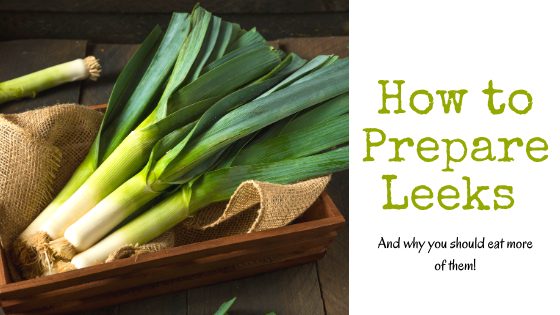
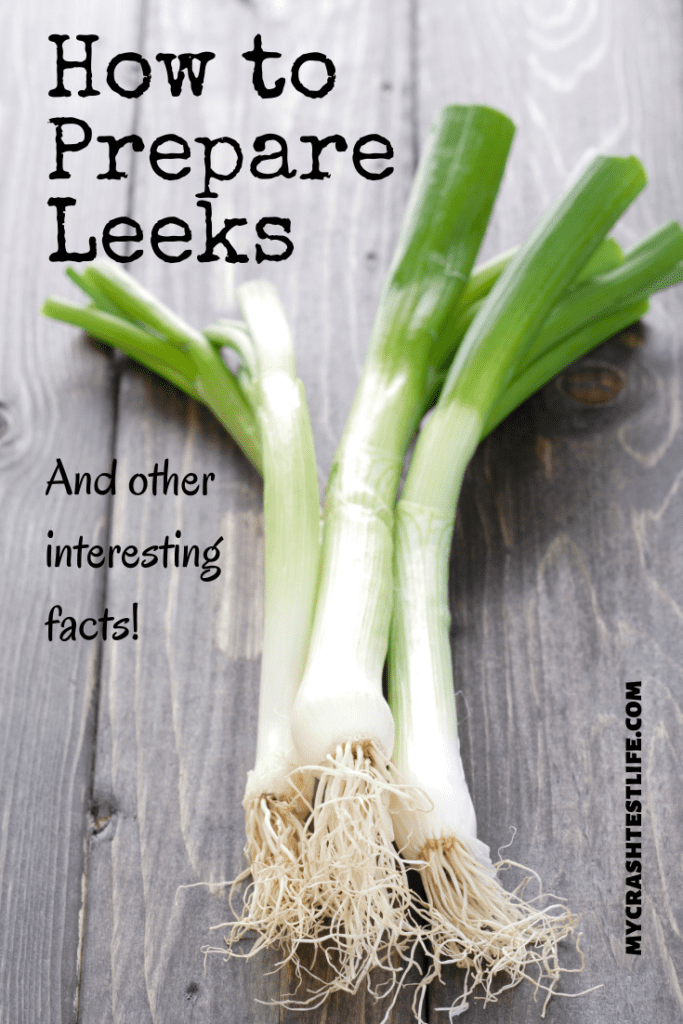
I'm sure you have walked by leeks over and over again in the grocery store and may have been intimidated by the lack of knowledge on how to properly prepare leeks. This simple step by step tutorial on how to prepare leeks for cooking will give you the confidence to try this amazing vegetable.
The history of the leek
Leeks enjoy a long and rich history, one that can trace its heritage back through antiquity. Thought to be native to Central Asia, they have been cultivated in this region and in Europe for thousands of years.
Leeks were prized by the ancient Greeks and Romans and were especially revered for their beneficial effect upon the throat. The Greek philosopher Aristotle credited the clear voice of the partridge to a diet of leeks, while the Roman emperor Nero supposedly ate leeks every day to make his voice stronger.
The Romans are thought to have introduced leeks to the United Kingdom, where they were able to flourish because they could withstand cold weather. Leeks have attained an esteemed status in Wales, where they serve as this country's national emblem. The Welsh regard for leeks can be traced back to a battle that they successfully won against that Saxons in 1620, during which the Welsh soldiers placed leeks in their caps to differentiate themselves from their opponents. Today, leeks are an important vegetable in many northern European cuisines and are grown in many European countries.
What exactly is a leek?
Leeks are a member of the onion family, native to the eastern Mediterranean and the Middle East—the biggest producers are Indonesia, Turkey, France, Republic of Korea, and Belgium. Leeks look like scallions (or green onions), but they're a lot larger. And their mild flavour and ease of preparation make the vegetable a favourite addition to soups, casseroles, and white meat entrées, as well as a simple side dish when gently sautéed.
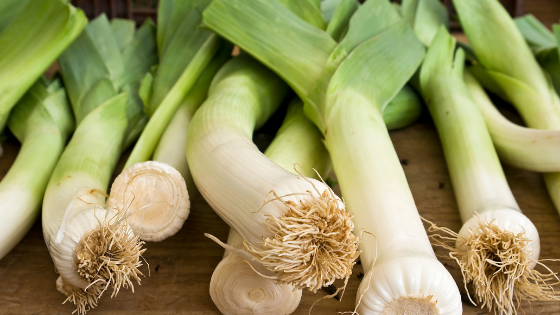
Although more expensive than other types of onions, their milk flavour and ease of preparation make these worth the extra little bit of money. Since autumn is the time for leeks (I am really trying to eat more seasonably), I was able to get 3 large leeks for $2.99 or about $1 a stalk.
What does a leek taste like?
Generally, the taste of leeks can be described as a mild onion that is slightly sweet. The younger the leek, the more delicate its flavour and texture.
How can you cook with leeks?
Leeks can be boiled, braised, fried, or roasted. They can be treated like onions, either sautéed in butter or olive oil or caramelized.
What are the health benefits of eating leeks?
Leeks are:
- low in calories
- high in magnesium and vitamins A, C, and K.
- contain small amounts of fibre, copper, vitamin B6, iron, and folate
- very high in antioxidants
How to select and store leeks
Leeks should be firm and straight with dark green leaves and white necks. Fresh leeks should be stored unwashed and untrimmed in the refrigerator, where they will keep fresh for between one and two weeks. Wrapping them loosely in a plastic bag will help them to retain moisture.
If you are not planning on using all your leeks, simply wash the leeks, pat them dry and slice them. Then place them in a container and freeze them until ready to use.
How to prepare leeks for cooking
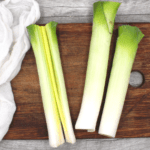
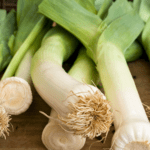
Begin by cutting off the roots (sometimes referred to as a "beard") and the darkest green tops (these can be reserved for making stock). You will be left with a white stalk and light green leaves that are just beginning to separate; these are the edible parts. Cut each leek into halves lengthwise, but avoid cutting all the way through the white end.

Rinse the leeks well, being sure to fan out the leaves that tend to trap a lot of dirt and debris. Pat the leeks dry, then chop, dice, or slice as needed.

If you like this "how-to" post, make sure you check out the following:
- How to Make Sugar-Free Cream Cheese Frosting
- How to Make Easy Curled Onion Decorations
- How to Roast Peppers in the Oven
- How To Roast An Acorn Squash





Leave a Reply